
There is an obscure story in the Old Testament that never gets told in children’s Bible classes. But it has an important lesson for Christians today. It teaches the importance of making sure we understand others before we judge them. Not only that, but it is a great lesson in conflict resolution. Let’s take a look at the story.
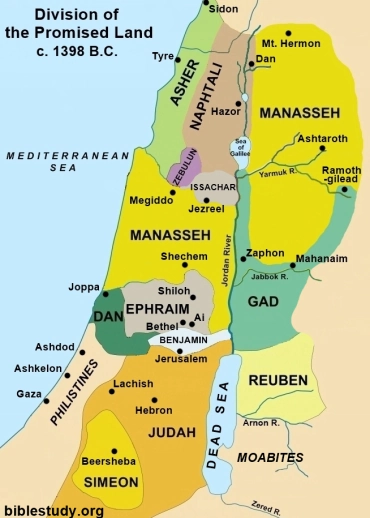
Before the children of Israel arrived at the border of Canaan, they had to spend some time fighting the nations around them before they even crossed the Jordan. The tribes of Reuben and Gad, and half the tribe of Manasseh, decided that the territory they had just conquered was sufficient. These tribes didn’t need to cross the Jordan to find their own land. They wanted to settle on the east side of the Jordan. They agreed that their men would cross with the other tribes, and they would help them conquer the Promised Land. When that was done, they would return to their families. Everyone agreed this was fair.
A Stone Altar
After a few years of fighting, Israel had finally conquered all the land it needed. It was time for the two and a half tribes to go home. Right after crossing the Jordan, before returning to their families, they stopped to build a large altar by the river. They didn’t offer a sacrifice on it, just built it and left.
This is where the story gets interesting.
But while they were still in Canaan, and when they came to a place called Geliloth near the Jordan River, the men of Reuben, Gad, and the half-tribe of Manasseh stopped to build a large and imposing altar. The rest of Israel heard that the people of Reuben, Gad, and the half-tribe of Manasseh had built an altar at Geliloth at the edge of the land of Canaan, on the west side of the Jordan River. So the whole community of Israel gathered at Shiloh and prepared to go to war against them. Joshua 22:10–12, NLT.
This might seem like overkill, but remember, they had just spent the past few years fighting pagan nations and destroying their gods. Now these two and a half tribes have erected an altar. In the minds of the other nine and a half tribes, this was heresy! These two and a half tribes had fallen into idolatry, and now they had to be wiped out, too.
But to their credit, they decided to talk before fighting.
The Concern
They sent a delegation led by Phinehas, son of Eleazar, the priest. They came to talk with the tribes of Reuben, Gad, and the half-tribe of Manasseh. In this delegation were ten leaders of Israel, one from each of the ten tribes.
When they arrived in the land of Gilead, they said to the tribes of Reuben, Gad, and the half-tribe of Manasseh, “The whole community of the Lord demands to know why you are betraying the God of Israel. How could you turn away from the Lord and build an altar for yourselves in rebellion against him? Was our sin at Peor not enough? To this day we are not fully cleansed of it, even after the plague that struck the entire community of the Lord. And yet today you are turning away from following the Lord. If you rebel against the Lord today, he will be angry with all of us tomorrow.
“If you need the altar because the land you possess is defiled, then join us in the Lord’s land, where the Tabernacle of the Lord is situated, and share our land with us. But do not rebel against the Lord or against us by building an altar other than the one true altar of the Lord our God. Didn’t divine anger fall on the entire community of Israel when Achan, a member of the clan of Zerah, sinned by stealing the things set apart for the Lord? He was not the only one who died because of his sin.” Joshua 22:13–20, NLT.
Notice their motive: They were concerned about idolatry. They had recently dealt with it at Peor (see Numbers 25:1–9). They did not want a repeat of the consequences of that mistake. The memory of what happened when they turned away from the Lord was still fresh in their minds. They thought that the altar had been built to worship a pagan deity. They encouraged their brethren that it would be better to cross the river and join them, rather than worship idols.
The Reality
It was a good argument. I love that instead of just starting a war, they started with dialogue. Then once they had expressed their concerns, they gave the two and a half tribes time to answer.
Then the people of Reuben, Gad, and the half-tribe of Manasseh answered the heads of the clans of Israel: “The Lord, the Mighty One, is God! The Lord, the Mighty One, is God! He knows the truth, and may Israel know it, too! We have not built the altar in treacherous rebellion against the Lord. If we have done so, do not spare our lives this day. If we have built an altar for ourselves to turn away from the Lord or to offer burnt offerings or grain offerings or peace offerings, may the Lord himself punish us.
“The truth is, we have built this altar because we fear that in the future your descendants will say to ours, ‘What right do you have to worship the Lord, the God of Israel? The Lord has placed the Jordan River as a barrier between our people and you people of Reuben and Gad. You have no claim to the Lord.’ So your descendants may prevent our descendants from worshiping the Lord.
“So we decided to build the altar, not for burnt offerings or sacrifices, but as a memorial. It will remind our descendants and your descendants that we, too, have the right to worship the Lord at his sanctuary with our burnt offerings, sacrifices, and peace offerings. Then your descendants will not be able to say to ours, ‘You have no claim to the Lord.’
“If they say this, our descendants can reply, ‘Look at this copy of the Lord’s altar that our ancestors made. It is not for burnt offerings or sacrifices; it is a reminder of the relationship both of us have with the Lord.’ Far be it from us to rebel against the Lord or turn away from him by building our own altar for burnt offerings, grain offerings, or sacrifices. Only the altar of the Lord our God that stands in front of the Tabernacle may be used for that purpose.” Joshua 22:21–29.
They explained that they had not built an altar to worship false gods. They didn’t even intend to worship the God of heaven with it. It was a visible memorial of all that God had done for them. It was to remind them of how God had fought for them and led them, to serve as a protection against leaving the Lord and serving other gods.
Conflict Resolution
This answer calmed the aggressive tribes. In the story Peor, Phinehas was the man who ended the plague by his decisive action. It is little wonder he was concerned, but the answer of the two and a half tribes persuaded him.
When Phinehas the priest and the leaders of the community—the heads of the clans of Israel—heard this from the tribes of Reuben, Gad, and the half-tribe of Manasseh, they were satisfied. Phinehas son of Eleazar, the priest, replied to them, “Today we know the Lord is among us because you have not committed this treachery against the Lord as we thought. Instead, you have rescued Israel from being destroyed by the hand of the Lord.”
Then Phinehas, son of Eleazar, the priest, and the other leaders left the tribes of Reuben and Gad in Gilead and returned to the land of Canaan to tell the Israelites what had happened. And all the Israelites were satisfied and praised God and spoke no more of war against Reuben and Gad. The people of Reuben and Gad named the altar “Witness,” for they said, “It is a witness between us and them that the Lord is our God, too.” Joshua 22:30–34.
Now, just imagine what would have happened if the nine and a half tribes had not asked the two and a half tribes to clarify their position. What if they had just charged across the river and attacked? In their minds, they would have been justified. Their job was to destroy all the idolatrous nations. If these tribes had left the Lord to worship idols, they had to be destroyed, too.
On the one hand, we can admire their dedication to God. But I think the most admirable thing is that they gave these tribes the chance to explain their position.
Clarification Saves Heartache
I remember once telling something to someone that I cared about, with all good intentions in my mind. But they misunderstood, and for weeks they avoided me. When I finally pinned them down and demanded they explain what was going on, they reminded me of what I had said and how it made them feel. I was devastated. I had said nothing wrong. They had misunderstood me. Then, instead of asking me to clarify, they had allowed the misunderstanding to fester. Their silence effectively shut down the relationship. They had assumed a motive behind my words that was diametrically opposite to my actual motive—just as the children of Israel had assumed that the altar meant that the eastern tribes were falling into idolatry, when the altar was actually to prevent their falling into idolatry!
One of the best things I ever did was decide to stop assuming I understood people. My training to be a counselor has taught me the necessity of getting the experience of the one I am talking to, rather than assuming I understand. But here’s the reality: Counselors and coaches aren’t the only ones who need to practice this. It is crucial for anyone dealing with conflict resolution.
Make the World a Better Place
The world would be a better place if everyone made sure they understood exactly what someone meant, instead of making assumptions. Of course, there are a few bad apples who will deceptively hide their true motives. But I think we would find that nearly all of our problems would disappear if we asked for clarification instead of assuming bad intent.
I’d love to hear your story. How has someone’s misunderstanding of you affected you? Have you ever misunderstood someone else? What were the consequences of that experience?